

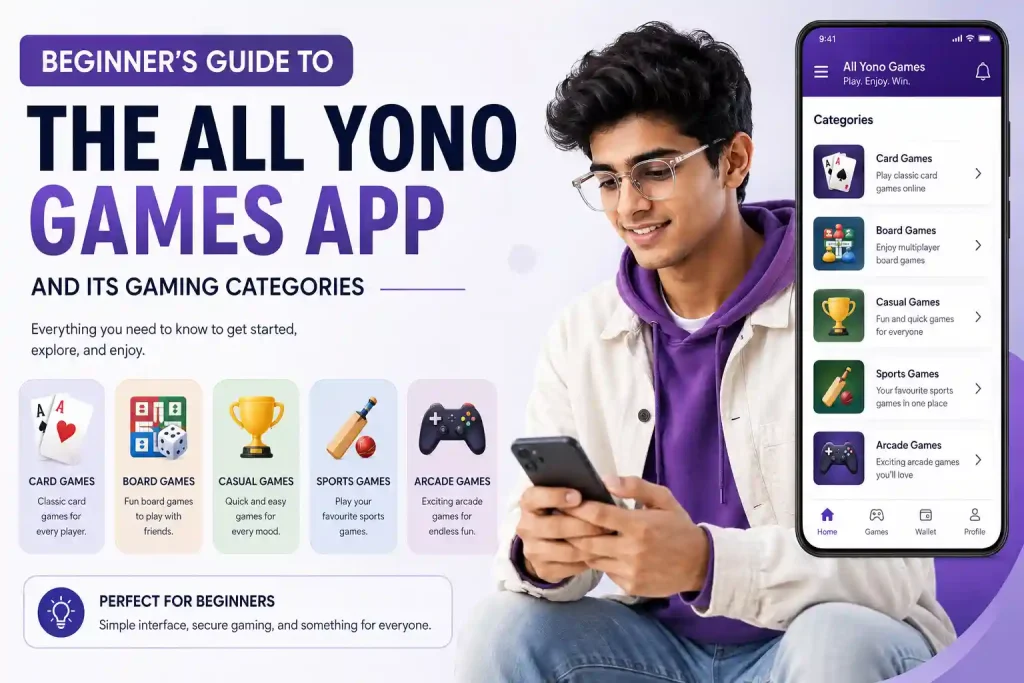
The expansion of smartphone usage in India has significantly influenced how people access digital entertainment. Over the last several years, mobile gaming platforms have shifted from single-purpose applications toward multi-category systems that combine several gameplay formats within one interface. The all yono games app India belongs to this broader category of mobile gaming platforms that organize different gaming styles into a centralized environment.
This structural shift reflects changing user behavior rather than temporary trends. Many smartphone users now prefer applications that reduce storage usage, simplify navigation, and provide access to different gameplay experiences without requiring multiple downloads. As a result, multi-category gaming systems have become increasingly visible across Android-based mobile ecosystems.
From an informational standpoint, understanding how these platforms function is useful for beginners because their structure differs substantially from traditional single-game applications. Rather than focusing on one gameplay model, they integrate several categories designed for varying interaction preferences and user familiarity levels.
How the All Yono Games App India Organizes Different Gameplay Categories?
The all yono games app india follows a category-based structure commonly observed in modern mobile gaming platforms. Instead of presenting a single gameplay objective, the application separates different gaming formats into organized sections that users can access independently.
Users exploring different gameplay formats often begin by reviewing the platform structure directly through the official application interface. For informational reference, readers can explore the platform categories through the all yono games app India categories and mobile gaming interface before examining the individual gameplay systems discussed below.
This type of organizational design supports easier navigation while also helping users explore multiple interaction styles within one application environment. Categories are generally separated according to gameplay mechanics, pacing, and interaction systems.
Several structural characteristics explain why this format has become increasingly common in mobile entertainment applications:
| Platform Feature | Functional Purpose |
| Centralized Navigation | Allows access to multiple categories in one interface |
| Reduced App Fragmentation | Minimizes the need for separate installations |
| Category Organization | Separates gameplay formats clearly |
| Mobile Optimization | Supports Android smartphone usability |
| Gameplay Diversity | Accommodates different interaction preferences |
These structural elements are part of broader mobile UX patterns that prioritize accessibility and simplified interaction systems for smartphone users.
Examining the Interface Structure and Navigation System
The interface design of multi-category gaming platforms is intended to simplify movement between different gameplay sections while maintaining a centralized navigation environment.
For beginners, however, the interface may initially appear visually dense because several content sections are displayed simultaneously. Homepage banners, category tabs, notifications, profile areas, and gameplay icons are commonly presented together within the opening interface.
Most platforms following this structure organize their navigation systems into recognizable sections:
| Interface Section | Informational Function |
| Homepage | Displays available or highlighted content |
| Categories Menu | Organizes gameplay formats |
| User Profile Area | Stores account preferences and settings |
| Notifications Section | Displays updates and informational messages |
| Support Center | Provides user guidance and assistance |
From a usability perspective, the interface prioritizes quick accessibility rather than deep menu structures. This reflects broader trends in smartphone application design where reducing navigation steps is considered important for maintaining interaction continuity.
Understanding the Role of Card-Based Games in Mobile Platforms
Card-based games continue to remain one of the most recognizable categories in Indian mobile gaming environments. Their ongoing presence within multi-category applications is closely linked to familiarity with structured gameplay systems and sequential interaction mechanics.
Within platforms such as the all yono games app india, card-based categories generally involve rule-oriented gameplay, turn-based interaction, and timing-based decision structures. Compared to reflex-heavy arcade systems, these categories usually operate at a slower pace and require greater attention to sequencing and gameplay logic.
From an informational perspective, card-style gameplay differs from rapid interaction formats because the primary emphasis is placed on pattern recognition and procedural understanding rather than continuous physical response speed.
Another important characteristic of these categories is interface simplicity. Card-based systems often use more controlled visual layouts with lower animation density compared to visually intensive gameplay formats. This may improve accessibility for users unfamiliar with fast-paced mobile interaction systems.
Research on casual gaming behavior frequently identifies familiarity as a major factor influencing long-term interaction patterns. Card-based categories often benefit from this familiarity because users may already recognize foundational concepts before interacting with digital versions.
Why Arcade-Style Gameplay Appeals to Casual Mobile Users?
Arcade-style gameplay represents a separate interaction model within multi-category gaming ecosystems. Unlike card-based formats, arcade systems generally prioritize immediate response mechanics, shorter gameplay cycles, and simplified interaction structures.
Most arcade categories involve tap-based controls, timing systems, obstacle interaction, or repetitive movement tasks designed for short-session engagement. These formats are structurally aligned with fragmented smartphone usage patterns where users interact with applications during commuting intervals, waiting periods, or brief breaks.
The popularity of arcade systems is therefore closely connected to broader mobile consumption behavior. Short interaction cycles reduce onboarding complexity while also allowing users to engage with gameplay without extensive preparation.
From a design standpoint, arcade categories emphasize continuity of interaction rather than extended strategic progression. Gameplay mechanics are often visually demonstrative, which reduces reliance on lengthy instructions or detailed tutorials.
This accessibility contributes to their continued inclusion within multi-category gaming platforms targeting broad smartphone audiences.
How Fishing-Style Games Use Visual Interaction Systems?
Fishing-style gameplay categories are commonly integrated into Asian mobile gaming ecosystems and are frequently observed within multi-category applications. These systems combine animated visual environments with repetitive interaction mechanics structured around continuous movement patterns.
The gameplay environment usually includes underwater themes, moving visual targets, and interaction loops designed to maintain sensory engagement. Despite the visually elaborate presentation, the gameplay mechanics themselves are often repetitive and structurally simple.
From an informational standpoint, fishing-style categories illustrate how modern mobile gaming increasingly incorporates visual immersion principles into casual interaction systems.
Their popularity is less connected to strategic complexity and more associated with environmental stimulation, visual continuity, and simplified interaction patterns.
| Gaming Category | Primary Interaction Structure | Relative Complexity |
| Card Games | Sequential and rule-oriented interaction | Moderate |
| Arcade Games | Reflex and timing-based systems | Low |
| Fishing Games | Repetitive visual interaction loops | Low |
| Puzzle Games | Logic and sequencing structures | Moderate |
| Multiplayer Formats | Real-time competitive interaction | Higher |
The variation between these categories demonstrates how aggregated gaming platforms accommodate different interaction preferences within one application environment.
Exploring Puzzle and Logic-Based Gameplay Categories
Puzzle-based gameplay formats differ substantially from arcade and visual interaction systems because they emphasize structured analytical processing rather than rapid physical response mechanics.
These categories commonly involve sequence organization, spatial logic, timing analysis, and problem-solving structures. Compared to reflex-oriented gameplay formats, puzzle systems generally operate at a slower pace and involve more deliberate interaction patterns.
Research on casual mobile gaming frequently associates puzzle-based systems with sustained engagement among users seeking lower-intensity interaction environments. Their inclusion within multi-category applications broadens accessibility by providing gameplay formats that do not rely heavily on speed or high visual stimulation.
Puzzle categories may also help beginners become more familiar with interface navigation because they allow slower exploration of controls and menu systems without requiring continuous rapid interaction.
Why Mobile Optimization Matters in Multi-Category Gaming Apps?
Device optimization plays a significant role in the usability of smartphone-based gaming applications, particularly in regions where mid-range Android devices remain widely used.
Applications such as the all yono games app india are generally designed with lightweight architecture, compressed assets, and simplified rendering systems intended to support broader device compatibility across varying hardware conditions.
Several technical factors directly influence interaction quality:
| Technical Element | Functional Effect on User Experience |
| Loading Efficiency | Reduces delays during navigation |
| Touch Responsiveness | Improves interaction accuracy |
| Storage Optimization | Supports lower-capacity devices |
| Connectivity Stability | Improves performance under weaker networks |
| Screen Adaptation | Enhances usability across display sizes |
These technical considerations are often underexamined despite their direct influence on accessibility and long-term usability within mobile gaming environments.
Common Navigation and Learning Challenges for Beginners
First-time users frequently experience interface-related challenges when interacting with multi-category gaming systems. One of the most common difficulties involves simultaneous exposure to multiple navigation pathways immediately after opening the application.
Unlike single-purpose applications, aggregated gaming platforms display numerous categories, icons, and interaction options at once, which may reduce navigation clarity during initial usage stages.
Another recurring issue involves bypassing instructional interfaces. Tutorials and onboarding systems are often ignored despite providing foundational explanations related to controls, navigation structures, and gameplay mechanics.
Usability research consistently indicates that onboarding quality influences comprehension, navigation confidence, and long-term interaction behavior within digital platforms.
Additionally, rapidly switching between unrelated gameplay categories may increase confusion because each category often follows different pacing systems and interaction logic.
Understanding Broader Trends in Smartphone-Based Digital Entertainment
The continued expansion of multi-category gaming applications reflects broader changes occurring within mobile entertainment ecosystems. Smartphone users increasingly prioritize flexibility, accessibility, and shorter interaction cycles compared to long-duration gameplay structures traditionally associated with console or desktop gaming environments.
In India, these trends are reinforced by smartphone-first digital consumption patterns where mobile devices function as primary entertainment tools across diverse demographic groups.
As a result, application design increasingly emphasizes:
- simplified access systems,
- reduced hardware dependence,
- shorter interaction structures,
- and integrated content organization.
Platforms such as the all yono games app india therefore represent part of a wider transition toward centralized digital entertainment systems optimized for smartphone accessibility and varied interaction preferences.
Conclusion
The all yono games app india can be understood as a multi-category mobile gaming platform structured around centralized navigation, category diversification, and smartphone-oriented accessibility systems.
From an informational perspective, understanding the platform involves examining how different gameplay formats are organized, how interface systems support navigation, and how mobile optimization influences usability across varying smartphone environments.
The growth of aggregated gaming applications also reflects broader developments within digital entertainment ecosystems where users increasingly prefer integrated platforms capable of supporting multiple interaction styles within a single mobile environment.
Frequently Asked Questions
The all yono games app india is a multi-category mobile gaming platform that combines several gameplay formats such as card-based games, arcade interaction systems, puzzle games, and visual simulation-style categories within one application.
Multi-category gaming platforms are becoming more common because they centralize navigation, reduce the need for multiple installations, and provide access to different gameplay formats through a single mobile interface.
Most multi-category gaming applications are optimized primarily for smartphone environments, particularly Android devices commonly used in mobile-first digital markets such as India.