

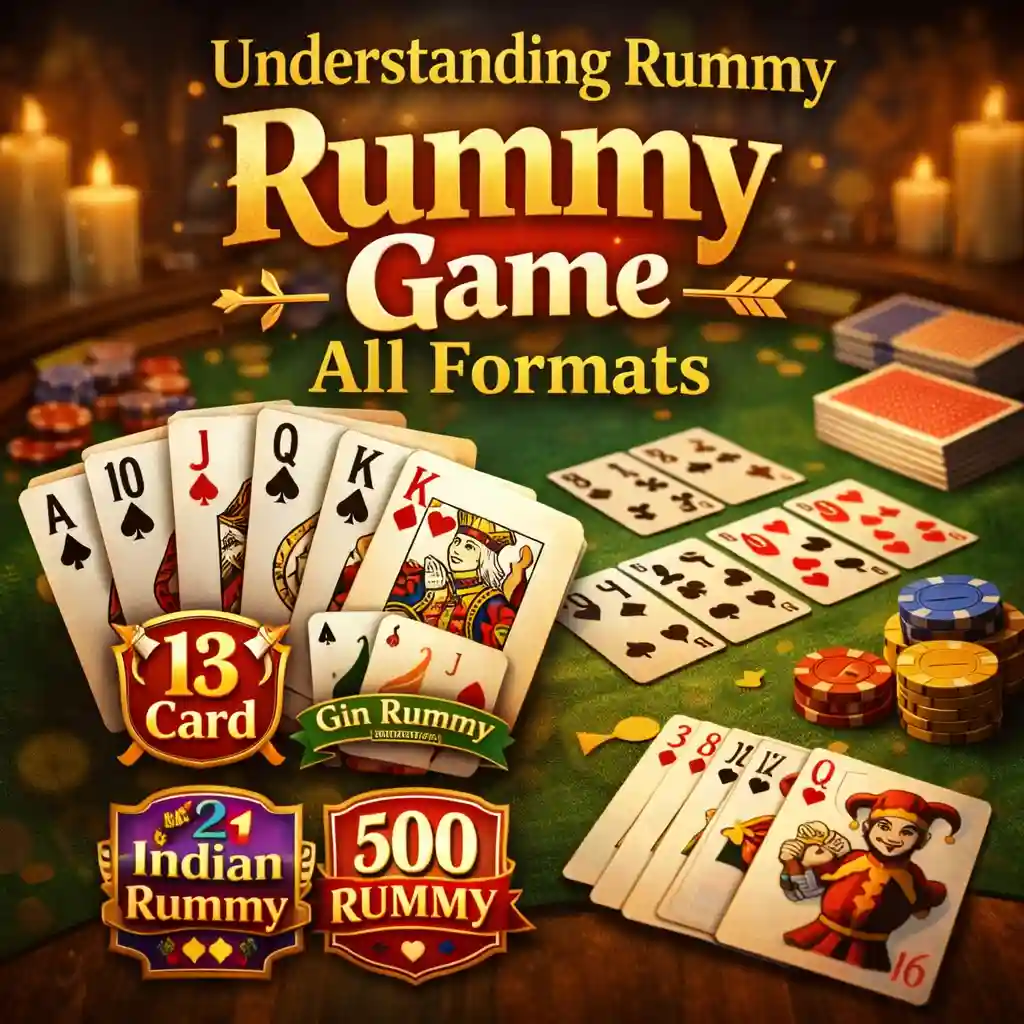
Over the years, rummy hasn’t stayed confined to drawing rooms and local clubs. The digital boom has expanded the game, introducing multiple formats and playing styles. Today, when players search for rummy games all formats, they often realize the game is much broader than they initially thought.
Different formats now cater to different playing styles — some are quick and casual, others strategic and long-term. Some are perfect for beginners, while others challenge experienced players who enjoy competitive play.
If you’ve ever felt unsure about how each version works or wondered which format suits you best, this guide walks you through everything in a clear and simple way. No complicated jargon, just practical understanding.
What Do People Mean by “Rummy Games All Formats”?
When players look up rummy games all, they are usually trying to understand the different variations of the game available today, especially on online platforms.
The core rules of rummy remain mostly unchanged:
- Players receive cards
- They arrange them into sequences and sets.
- A pure sequence is mandatory.
- And a valid declaration determines the winner.
What changes from format to format is how the scoring works, how long games run, and how winners are decided.
Some formats emphasize speed and quick wins, while others reward patience and calculated gameplay over several rounds. Understanding these differences helps players choose games according to their mood — whether they want a quick match or a longer, strategic session.
Core Rules Shared Across Rummy Games All Formats
Before exploring individual formats, it’s useful to understand the common rules that bind them together.
In Indian rummy:
- Each player typically receives 13 cards.
- One or two decks are used depending on player count.
- Printed jokers and wild jokers assist in forming combinations.
- A pure sequence is mandatory for a valid hand.
- Players must make a correct declaration to win.
No matter which format you choose, these fundamentals remain consistent. The real variation comes from scoring systems and elimination rules.
Table 1: Overview of Major Rummy Formats
| Rummy Format | Game Duration | Best For | Winning Style |
| Points Rummy | Very Fast | Quick sessions | Lowest points win |
| Pool Rummy | Medium to Long | Strategic players | Avoid elimination |
| Deals Rummy | Fixed rounds | Competitive play | Highest chips win |
| Tournaments | Long | Skilled competitors | Knockout structure |
| Practice Games | Flexible | Beginners | No monetary risk |
Each format has its own pace and appeal. Understanding them individually makes choosing easier.
Points Rummy – Fast and Straightforward
Points rummy is widely considered the simplest and fastest format, making it the most popular choice online.
The game typically ends after a single round. Points carry monetary value, and players settle losses based on the points left in their hands when someone declares.
Because rounds are quick, players often play several games consecutively. Decisions must be made quickly, and finishing early is rewarded.
This format suits players who:
- Prefer short gaming sessions
- Enjoy fast decision-making
- Want immediate results
Points rummy is ideal for casual play or short breaks when time is limited.
Pool Rummy – Long-Term Strategy Matters
Pool rummy changes the dynamic by focusing on survival rather than instant victory.
Players continue playing multiple rounds, and each accumulates points for losing hands. Once a player crosses a predefined limit — usually 101 or 201 points — they are eliminated.
The game continues until only one player remains.
This means strategy shifts significantly. Instead of rushing to win, players often play cautiously to avoid accumulating high points. Defensive play becomes important.
Experienced players appreciate pool rummy because it rewards consistency and patience over aggressive tactics.
Deals Rummy – Balanced Competition
Deals rummy offers structured gameplay through a fixed number of rounds, known as deals.
Each player begins with an equal number of chips. After every deal, chips are exchanged based on results, and at the end of all deals, the player with the highest chip count wins.
Since players know how many rounds remain, strategies often shift mid-game. Someone trailing in chips might take calculated risks to recover, while leaders may play conservatively.
This predictable structure makes deals rummy popular among competitive players who enjoy measured gameplay.
Table 2: Standard Rummy Card Point Values
| Card Type | Points Value |
| Number cards (2–10) | Face value |
| Face cards (J, Q, K, A) | 10 points each |
| Joker cards | 0 points |
| Pure sequence cards | 0 points |
| Unmatched cards | Full value counted |
Knowing card values is essential because improper grouping often results in heavy penalties. High cards left unmatched can quickly increase a player’s score.
Tournament Rummy – Competitive Environment
Tournament rummy raises the stakes further by introducing competitive elimination rounds.
Players enter structured contests where winners advance to the next stage while others exit. As rounds progress, competition intensifies, and strategic discipline becomes critical.
Tournament play typically demands:
- Patience and consistency
- Observation of opponent discards
- Careful risk management
- Strategic adaptability
For players seeking challenge beyond casual gaming, tournaments provide an exciting experience.
Online Rummy vs Traditional Table Play
Traditional rummy, played among friends and family, carries a social charm that many still cherish. Reading expressions, playful banter, and relaxed pacing make offline sessions memorable.
However, online rummy has introduced convenience and accessibility.
Digital platforms provide:
- Automatic card arrangement
- Time-bound turns for faster gameplay
- Instant scoring
- Secure shuffling systems
- Practice tables for beginners
Modern players often enjoy both formats depending on occasion — casual offline sessions for fun and online games for convenience.
Table 3: Feature Comparison Across Popular Formats
| Feature | Points Rummy | Pool Rummy | Deals Rummy |
| Speed of gameplay | High | Moderate | Moderate |
| Strategic depth | Medium | High | High |
| Session length | Short | Long | Medium |
| Beginner-friendly | Yes | Moderate | Moderate |
| Online popularity | Very High | High | High |
This comparison helps new players understand which format aligns with their preferences.
Regional Rummy Variations
India’s cultural diversity reflects in rummy as well. Some regions prefer 21-card rummy, while others adjust joker rules or scoring methods.
Local clubs sometimes add custom variations suited to their communities.
Online platforms, however, standardize rules to ensure fairness among players nationwide. Still, encountering regional variations while traveling or playing locally adds an interesting twist to the game.
Choosing the Right Format for Yourself
There isn’t a single correct format for everyone. Preferences change with mood and experience. Beginners often start with points rummy due to its simplicity and speed. Players seeking depth move toward pool or deals formats, while competitive gamers gravitate toward tournaments.
Many experienced players alternate formats depending on how much time they have or what kind of experience they seek. Exploring different formats helps players understand their strengths and preferred playing styles.
Common Mistakes Across All Formats
Regardless of format, certain mistakes frequently cost players games.
Holding high-value cards too long, delaying formation of a pure sequence, declaring prematurely, or playing overly defensive hands can all lead to losses.
Rummy rewards observation and flexibility. Skilled players constantly track discards, anticipate opponents’ needs, and adapt their strategy during gameplay.
Practical experience often teaches lessons faster than theoretical understanding.
How Digital Platforms Changed Rummy
Technology has significantly transformed how rummy is played today.
Players can now join tables anytime, compete with players across the country, practice risk-free, and participate in tournaments instantly.
Digital security measures and fair shuffling systems have increased trust in online play, while faster gameplay keeps sessions engaging.
Despite these advancements, the core attraction remains unchanged — skill combined with patience and timing.
Conclusion
Understanding rummy games all formats is less about memorizing rules and more about recognizing how gameplay evolves under different structures. Once players grasp the distinctions, they begin making smarter choices about where and how they play. They learn when to play cautiously, when to push aggressively, and how different scoring systems influence decisions.
Ultimately, rummy continues to thrive because it blends strategy, psychology, and a touch of luck. The more formats you explore, the richer the experience becomes — and the better you understand the game itself.
Related guides: Rummy All Games List and All Rummy App 51 Bonus List.